How to Prepare for Bed Bug Treatment in Staten Island | Heat & Chemical Prep Guide
Step-by-step preparation instructions for both heat treatment and chemical treatment — what to do, what to avoid, and why preparation affects results.
Quick Answer
Heat treatment preparation requires clearing access to all areas and removing heat-sensitive items. Chemical treatment requires more extensive laundering and bagging of soft goods. Both require vacating the space during treatment — heat treatments for 6–8 hours, chemical treatments for 4 hours minimum. Your technician will provide a specific checklist before your appointment.
Preparation is one of the most important factors in bed bug treatment success. A treatment performed on a well-prepared space achieves dramatically better outcomes than the same treatment on a space that wasn’t properly prepared. This isn’t a formality — it’s a direct factor in whether bed bugs survive the treatment.
The preparation requirements for heat treatment and chemical treatment are different. This guide covers both, so you know exactly what to do before your appointment regardless of which method your technician recommends.
Preparing for Bed Bug Heat Treatment
Heat treatment works by raising the entire treatment area to a lethal temperature of 118°F–122°F and holding it there for 90 minutes at the coolest point in the room. The preparation goal is to ensure heat can reach every part of the space and that heat-sensitive items won’t be damaged.
Items to Remove Before Heat Treatment
The following items must be removed from the treatment area before heat treatment begins:
- Aerosol cans — hairspray, spray paint, cooking spray, and any pressurized canister. These can rupture or explode at elevated temperatures.
- Candles and wax items — they will melt.
- Medications — most medications have maximum storage temperatures well below the treatment temperature.
- Cosmetics and toiletries — many will degrade, separate, or melt.
- Artwork and photographs — irreplaceable items should be removed as a precaution even when they may survive treatment.
- Plants and pets — all living things must be removed from the treatment area.
- Vinyl records, CDs, and DVDs — these will warp at treatment temperatures.
- Musical instruments — heat damages adhesives and finishes on most instruments.
- Certain electronics — your technician will advise on specific items; most electronics are fine at treatment temperatures but some have temperature-sensitive components.
- Fire extinguishers — remove from the treatment area.
What to Leave in Place for Heat Treatment
Unlike chemical treatment, heat treatment requires that most items remain in the space. This is one of heat treatment’s primary advantages — you do not need to bag and launder all your clothing and soft goods. Leave the following in place:
- Clothing and bedding in closets and drawers — heat will penetrate these areas and treat them in place
- Mattresses and box springs — do not bag or move these
- Furniture — leave all furniture in its normal position to allow heat circulation
- Luggage — leave open in the treatment area so heat can penetrate
Access Requirements for Heat Treatment
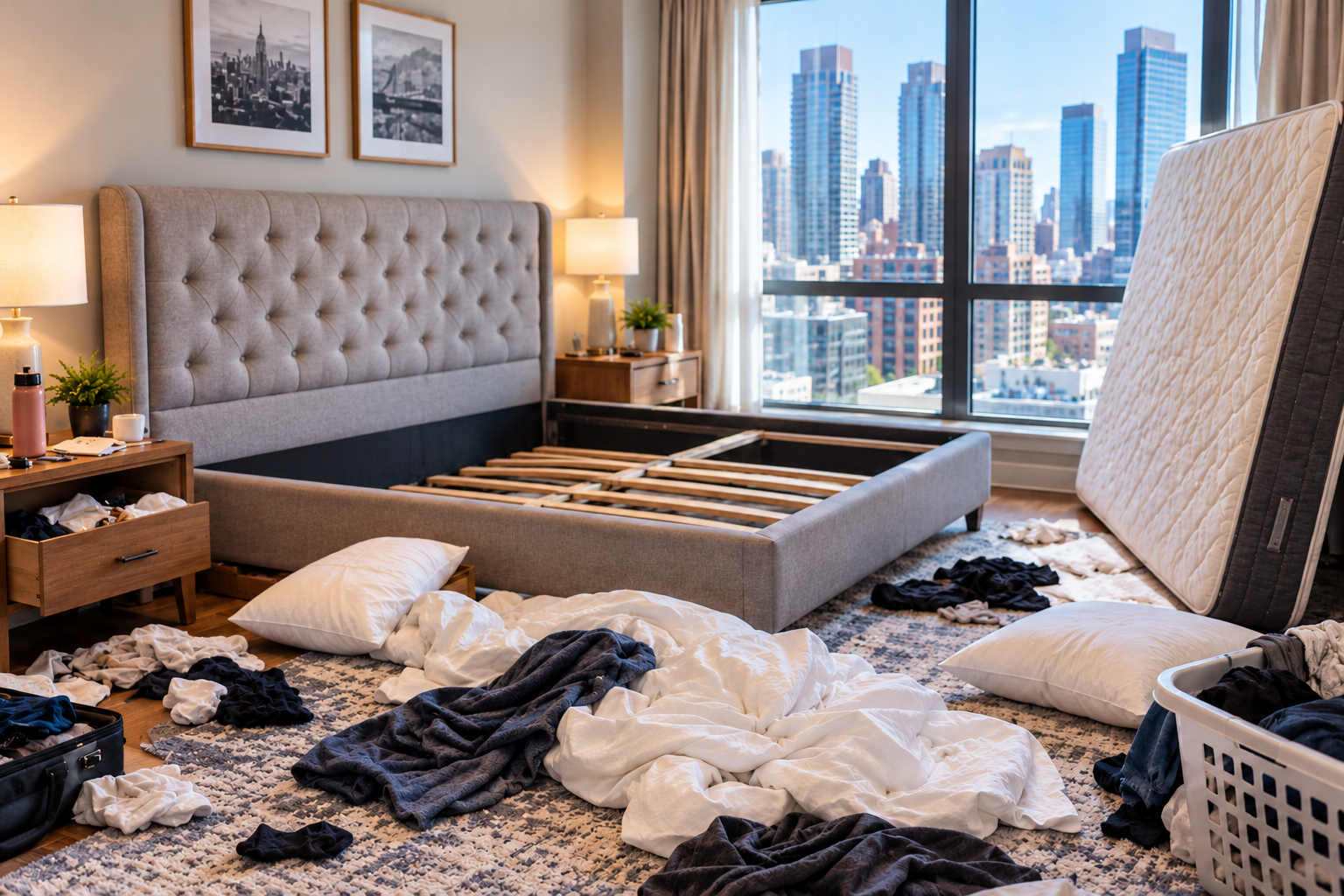
Technicians need unobstructed access to all areas of the treatment space to place heating equipment and fans for proper air circulation. Clear pathways to all rooms, closets, and under-bed areas before the treatment day. If a closet or room has excessive clutter that prevents placing equipment, it may not reach lethal temperature — clutter is one of the most common reasons a heat treatment area is partially unsuccessful.
During and After Heat Treatment
You, all other occupants, and all pets must vacate the space for the entire treatment period — typically 6 to 8 hours. Do not re-enter during treatment. After treatment, your technician will clear you to re-enter when the space has cooled to a safe temperature. Expect some items to be moved from their original positions; the technician will have repositioned them to ensure complete heat exposure.
Preparing for Chemical Bed Bug Treatment
Chemical treatment relies on contact and residual insecticides applied to bed bug harborage areas. The preparation goal is to expose as many harborage sites as possible and to ensure that treated surfaces aren’t disrupted before the residuals have time to work.
Laundering and Bagging Soft Goods
Chemical treatments require more extensive preparation of soft goods than heat treatments. Before your chemical treatment appointment:
- Wash all clothing, bedding, curtains, and stuffed animals on the hottest possible wash and dry cycle — minimum 30 minutes in a dryer at high heat (120°F+) kills bed bugs at all life stages
- Place laundered items directly into sealed plastic bags or bins and do not return them to the treatment area until after treatment is complete and dry
- Store bagged items in a room that is not being treated, or in your vehicle
Preparing Furniture and Floors
- Pull all furniture away from walls by at least 12 inches to allow access to baseboards and wall-floor junctions
- Remove items from under the bed — storage boxes, shoes, and other items stored beneath beds must be removed or moved to the center of the room so the technician can treat the area
- Empty nightstands and dressers near the bed so drawers can be treated inside and out
- Remove outlet covers and switch plates if instructed — your technician will advise
After Chemical Treatment
You and all occupants must stay out of the treated area for a minimum of 4 hours after treatment — longer if your technician specifies. Do not clean, mop, or wipe down treated surfaces for at least 2 weeks after chemical treatment — residuals need time to work, and cleaning removes them before bed bugs have a chance to contact them. Leave furniture pulled away from walls for 7 to 10 days. Chemical treatments typically require a follow-up visit 10 to 14 days later to treat any eggs that hatched after the initial application.
Frequently Asked Questions
No — this is one of the biggest advantages of heat treatment over chemical treatment. For heat treatment, clothing can be left in drawers and closets because the heat penetrates through closed storage. You only need to remove heat-sensitive items as listed above. The extensive bagging and laundering requirements apply to chemical treatment, not heat treatment.
Incomplete preparation directly reduces treatment effectiveness. For heat treatment, excessive clutter prevents hot air from circulating to all areas, leaving cool spots where bed bugs can survive. For chemical treatment, items left on the floor or furniture not pulled from walls reduce the surface area the technician can treat. Either way, inadequate preparation is one of the most common reasons a treatment doesn’t fully resolve an infestation. Following the preparation checklist carefully is worth the effort.
Be very careful about moving items between rooms before treatment. If bed bugs are in an item you move, you’re potentially spreading the infestation to areas that aren’t being treated. For heat treatment, clutter should be organized within the treatment area — not moved to other rooms — unless the items being moved are heat-sensitive and need to be removed entirely. Ask your technician before moving anything significant in the days before the appointment.



2 Comments