How Bed Bug Treatment Works | Step by Step
A clear explanation of our six-step bed bug treatment process — from initial inspection through follow-up visit — so you know exactly what to expect. Licensed and insured specialists serving Staten Island, NY.
The bed bug treatment process follows six steps: initial inspection, written treatment recommendation, preparation instructions, treatment day service, post-treatment monitoring, and a follow-up visit. The full process from first inspection to follow-up spans two to three weeks for chemical treatments and can be completed in a single day with heat treatment. Each step is designed to eliminate the infestation completely and confirm the result.
The Complete Bed Bug Treatment Process
Bed bug treatment is not a single event — it is a structured process. Skipping steps or relying on a single application without follow-up is one of the main reasons infestations return. Our six-step process is designed to eliminate the infestation fully and confirm the result before we consider the job complete.
Every treatment begins with a professional bed bug inspection and ends with a documented follow-up. Here is exactly what happens at each stage.
Initial Inspection
A licensed specialist visits your property and conducts a systematic room-by-room inspection. Every known harborage location is examined — mattress seams, box springs, headboards, baseboards, electrical outlets, upholstered furniture, nightstands, and picture frames. The inspection is free and takes 30 to 60 minutes depending on property size.
The inspector documents all evidence found: live insects, fecal spotting, shed exoskeletons, and egg casings. This documentation becomes the foundation for the treatment plan. If no infestation is confirmed, you receive a written report saying so. If infestation is confirmed, the inspection report details the severity and affected areas.
Written Treatment Recommendation
After the inspection, we provide a written treatment recommendation. The recommendation specifies which treatment method is appropriate — heat treatment, chemical treatment, or a combination — based on the size of the affected area, the severity of the infestation, the type of property, and resident circumstances.
Heat treatment and chemical treatment differ significantly in timeline and resident requirements. Understanding those differences upfront allows you to plan accordingly. We do not proceed to treatment until you have reviewed and agreed to the written recommendation and quote.
Heat treatment timeline: Heat treatment can eliminate an active infestation in a single treatment day. Residents vacate for 6 to 8 hours while temperatures throughout the treated space reach and hold at levels lethal to all life stages of bed bugs. There is no waiting period between treatment and re-entry beyond the heat dissipation time. Learn more on our heat treatment page.
Chemical treatment timeline: Chemical treatments involve multiple visits over two to three weeks. An initial application is followed by a second visit at approximately two weeks to treat any bugs that hatched from eggs after the first application. Eggs are resistant to most chemical treatments, which is why the follow-up visit is not optional — it is built into the process.
Preparation Instructions
Proper preparation is one of the most important factors in treatment effectiveness. Before treatment day, residents receive a written preparation checklist. Completing the prep correctly allows the treatment to reach all harborage areas without obstruction.
Typical preparation tasks include washing and heat-drying all bedding, clothing, and curtains from affected rooms and sealing them in bags. Clutter on floors and under beds should be reduced to allow access. Furniture should be pulled slightly away from walls. Residents should not move furniture or items from affected rooms to unaffected areas, as this can spread the infestation.
Specific prep instructions vary by treatment method. Our team will go through the checklist with you clearly at the time of the written recommendation so there are no surprises on treatment day.
Treatment Day Logistics
On treatment day, residents and pets vacate the treated areas. For heat treatment, the property must be vacated for 6 to 8 hours. For chemical treatment, vacate time is typically 4 hours after application. Our team uses professional-grade equipment staged outside the property.
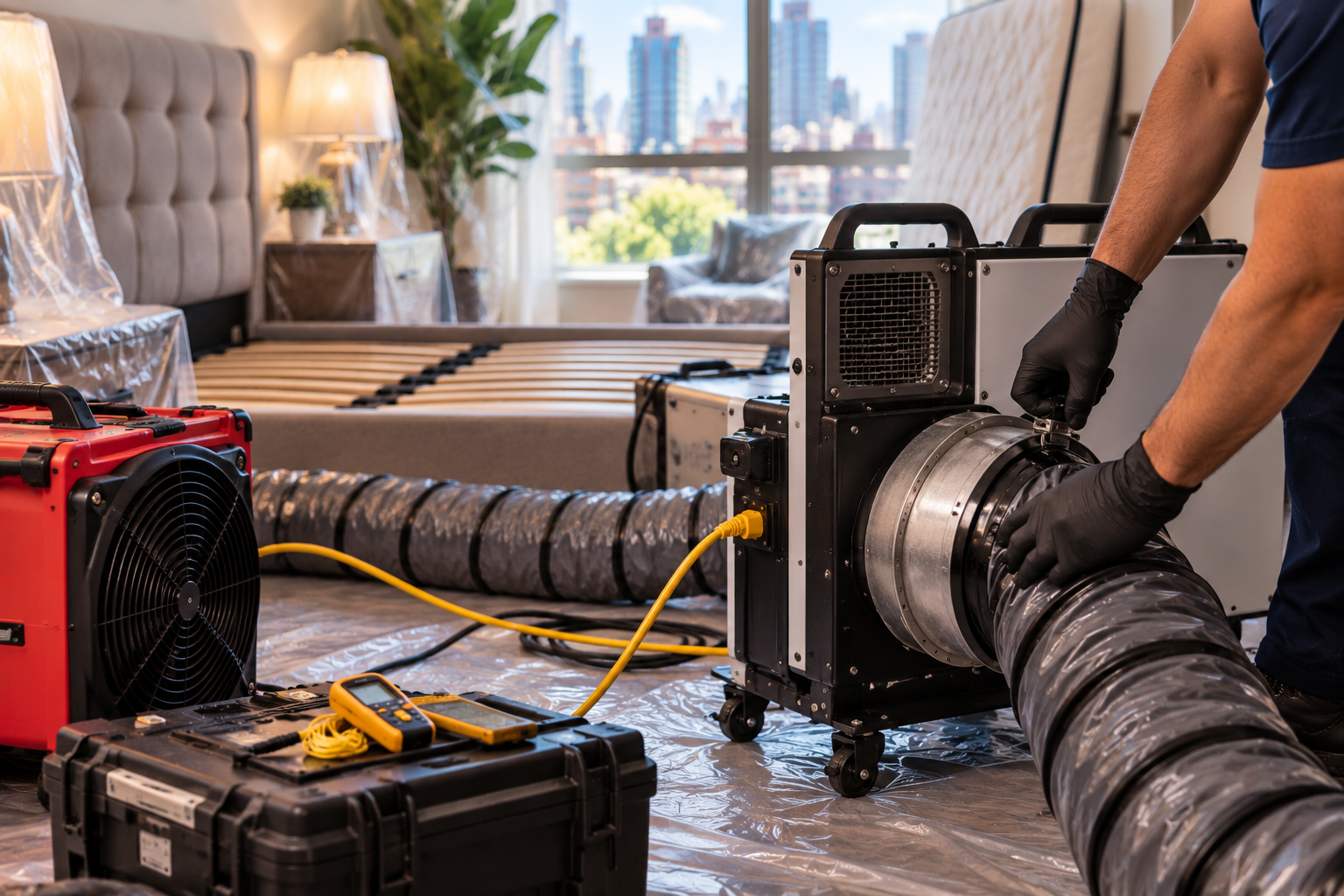
During treatment, all identified harborage zones are addressed. For heat treatment, specialized equipment raises room temperatures to 118 degrees Fahrenheit or above and holds them there long enough to penetrate furniture, walls, and belongings. All life stages — eggs, nymphs, and adults — are eliminated on contact with sustained heat at these levels.
For chemical treatments, EPA-registered residual insecticides are applied to harborage zones and travel paths. The specialist takes care to protect food preparation areas and avoids surfaces that come into direct contact with skin. Residents are given specific post-application instructions for re-entry and use of treated areas.
Post-Treatment Monitoring
After treatment, monitoring continues. For chemical treatments, interceptor monitors are placed under bed and furniture legs to catch any activity between the first and second visits. Residents are asked to report any signs of continued activity — bites, visible insects, or staining — promptly.
During the monitoring period, residents should avoid deep cleaning or vacuuming in treated areas, as this can remove residual treatment. Bedding that was laundered before treatment should remain clean and bagged until the follow-up visit confirms clearance.
It is not unusual to see a small number of affected insects in the days immediately following treatment. Some insects are flushed out of harborage by the application and may be visible as they die. This is expected and is not a sign of treatment failure.
Follow-Up Visit
The follow-up visit occurs approximately two weeks after the initial treatment for chemical treatments. The specialist re-inspects all previously affected areas, checks interceptor monitors, and applies a second chemical treatment to address any insects that hatched from eggs after the first visit.
For heat treatments, a follow-up inspection may still be scheduled to confirm clearance, though a second heat treatment is rarely required when the initial treatment was conducted correctly in a fully prepared space.

At the conclusion of the follow-up visit, a written clearance report is provided when no further activity is detected. This documentation is useful for landlords complying with NYC Local Law 69 disclosure requirements, tenants who need a record of remediation, and property managers maintaining treatment histories.
What Guarantees Are Offered and What Conditions Apply
We stand behind our work. Chemical treatment programs include the follow-up visit as part of the standard service — it is not an add-on. If activity is confirmed at the follow-up visit, additional treatment is provided.
Guarantees are contingent on the preparation checklist being completed before treatment. Incomplete preparation — such as failing to launder bedding, leaving clutter in treated areas, or moving items from affected rooms to other parts of the property before treatment — reduces treatment effectiveness and voids guarantee terms. We explain this clearly at the time of the written recommendation.
Multi-unit buildings present additional complexity. Treatment of one unit in a building where adjacent units are also infested may require coordinated building-wide treatment to prevent re-infestation through shared walls. We will note this risk when it applies and recommend the appropriate scope of work.
Questions about the process? Call (516) 914-4713 or review our bed bug inspection page for more on what happens before treatment begins.
Treatment Process — Frequently Asked Questions
For heat treatment, residents and pets vacate for 6 to 8 hours while the space is brought to and held at lethal temperatures. For chemical treatment, the vacate period is typically 4 hours. The exact timing will be confirmed before treatment day. You will receive a specific re-entry time before the specialist begins work.
In most cases, no. Mattresses can be treated and then encased in a bed bug-proof mattress encasement following treatment. Discarding a mattress is rarely necessary and can actually spread an infestation if the mattress is dragged through shared building areas without proper containment. We will tell you clearly if a mattress or piece of furniture cannot be effectively treated and should be discarded.
Seeing a small number of insects in the days immediately following treatment is not unusual. Some insects are flushed from harborage and may be visible as they die from exposure to residual treatment. Report any continued activity to us promptly. If you are seeing active, unaffected insects more than a week after chemical treatment, contact us before the scheduled follow-up visit so we can assess the situation.
Both are effective when applied correctly. Heat treatment eliminates all life stages including eggs in a single visit and requires no residual chemicals in the home. It is often preferred for households with young children, for short-term rental hosts who need to return a unit to service quickly, and for severe infestations. Chemical treatment is effective for most residential situations and may be more appropriate when building construction limits heat treatment access. We recommend the method best suited to your specific property and circumstances.
Re-infestation after successful treatment is possible, especially in buildings with high tenant turnover or shared walls with untreated neighboring units. Treatment eliminates the current infestation — it does not create a permanent barrier against future introductions. We recommend mattress encasements and interceptor monitors after treatment to detect any future activity early, when it is simplest to address.
Service Area
Serving Staten Island and nearby communities in northern New Jersey. Call (516) 914-4713 to confirm same-day availability in your area.